
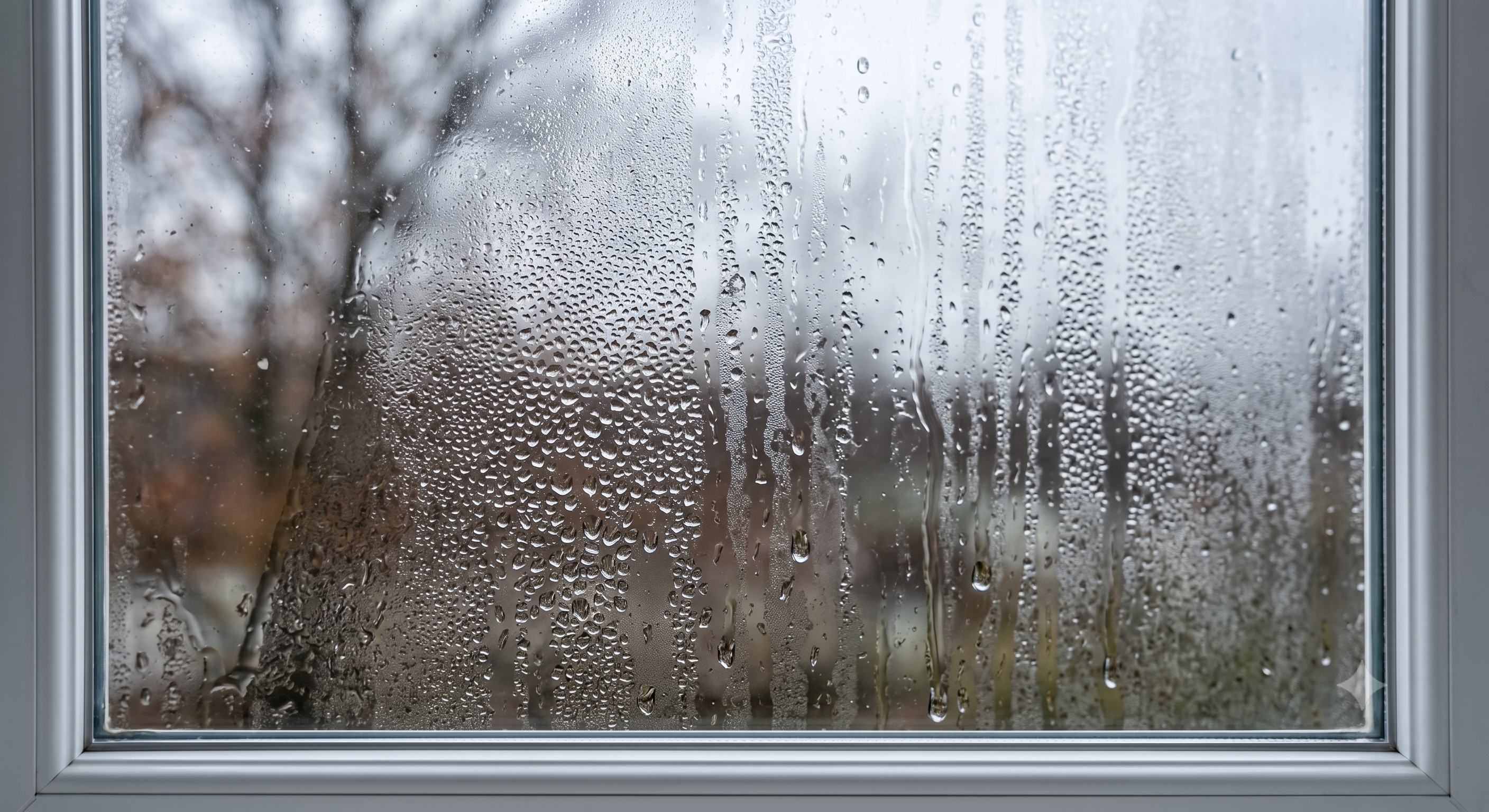
Every winter, many homeowners notice fog or frost on their windows and wonder whether it’s normal. Window condensation is common, but it can also be a sign of an underlying problem that deserves your attention.
Why does condensation form?
Condensation forms when warm, humid air in your home comes into contact with a cold surface, such as window glass in winter. The moisture in the air then turns into small droplets of water. The bigger the temperature difference between inside and outside, and the higher the indoor humidity, the more likely condensation is to appear.
Condensation on the inside vs. between the panes
It’s important to tell two types of condensation apart:
- On the inside surface of the window: usually caused by too much humidity in the house rather than a defect in the product. Good ventilation and controlling indoor humidity often solve the problem.
- Between the two panes of the sealed glass unit: if you see fog or lasting marks between the panes, it usually means the unit’s seal is broken and it has lost its insulating gas. In that case, the sealed glass unit needs to be replaced.
How to reduce indoor condensation
A few simple steps can help limit condensation on your windows:
- Use an exhaust fan in the bathroom and kitchen, especially while showering or cooking.
- Keep indoor humidity around 30 to 40% in winter.
- Make sure vents and air exchangers are working properly.
- Open curtains or blinds slightly to let air circulate near the windows.
When should you worry?
If condensation persists despite good humidity control, or if it appears between the panes, it’s time to contact us. Our sealed glass unit replacement service often solves the problem without replacing the whole window.
Feel free to get in touch with any questions about condensation or to have your windows assessed.